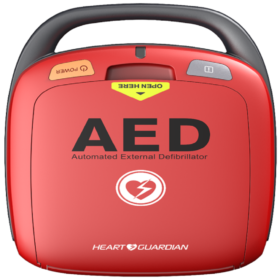
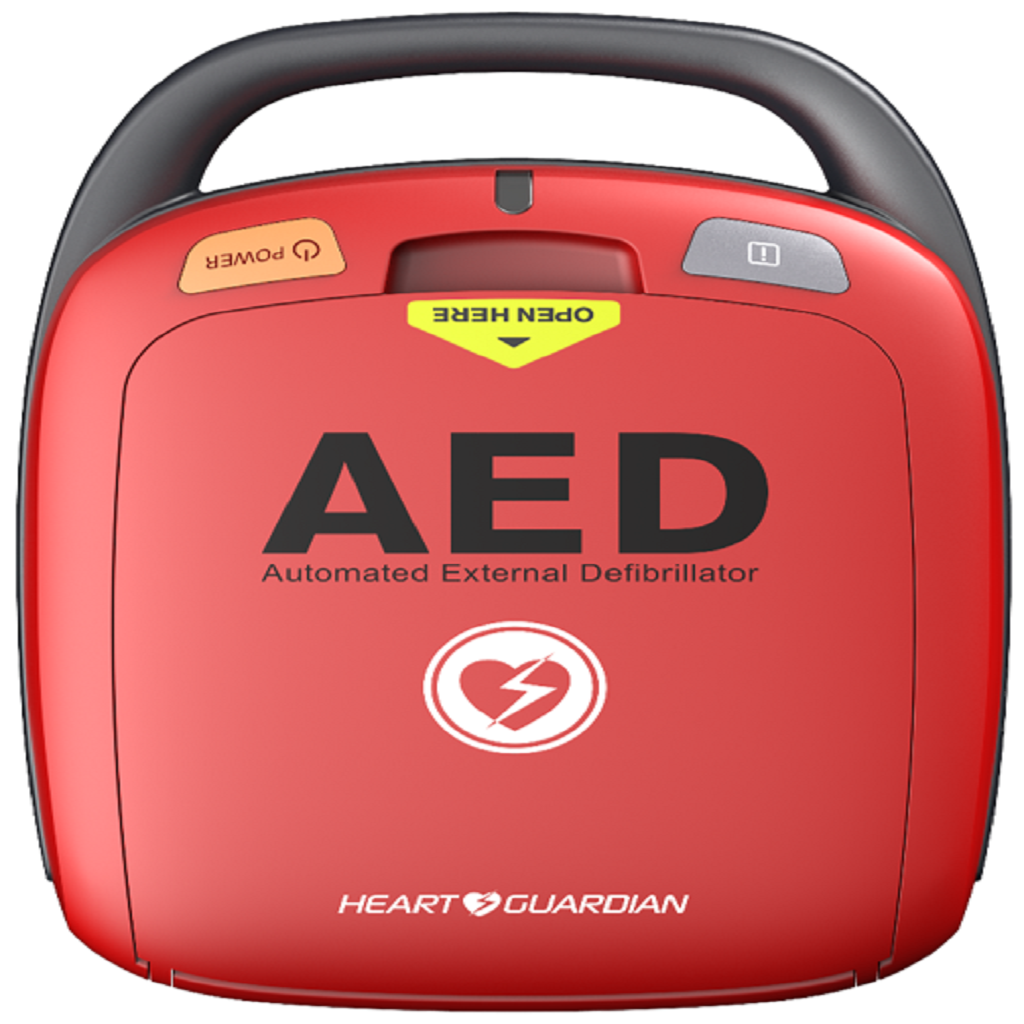
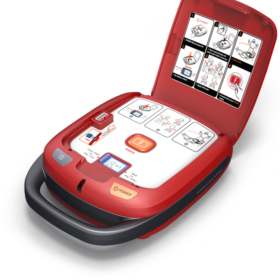
An AED (Automated External Defibrillator) is a portable life-saving medical device used to treat sudden cardiac arrest (SCA). It analyzes the heart rhythm and, if needed, delivers an electric shock to restore a normal heartbeat.
What an AED does
-
Detects dangerous heart rhythms
-
Delivers an electric shock (defibrillation)
-
Helps restore a normal heart rhythm
-
Guides rescuers with voice and visual instructions
The shock stops abnormal electrical activity so the heart can return to a normal rhythm.
When an AED is used
AEDs are used during sudden cardiac arrest, when a person:
-
collapses suddenly
-
is unresponsive
-
is not breathing normally
-
has no pulse
Most cardiac arrests occur due to ventricular fibrillation, a chaotic heart rhythm that requires immediate defibrillation.
Why AEDs are important
✔ Saves lives during cardiac arrest
✔ Can be used by anyone with minimal training
✔ Provides step-by-step voice guidance
✔ Critical before ambulance arrival
✔ Improves survival rates significantly