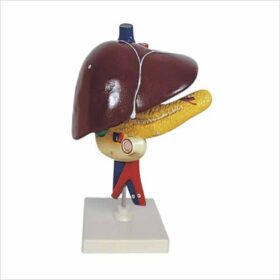
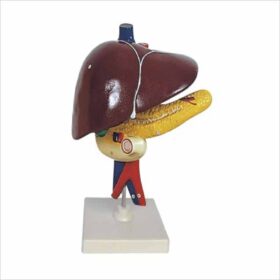
Anatomical models of the Liver, Pancreas and Duodenum are essential educational tools used to demonstrate the complex spatial and functional relationships of the hepatobiliary and upper digestive systems. These models typically illustrate how the C-shaped duodenum curves around the head of the pancreas and receives bile and enzymes via a network of ducts.
- Life-Size Accuracy: Most high-quality models use a 1:1 scale to provide a realistic representation of human organ proportions.
- Dissectible Parts: Many models are dissectible into 3 parts (liver, pancreas, and duodenum) or up to 6 parts (including the gallbladder, spleen, and stomach) to allow for internal inspection.
- Vascular & Duct Systems: Models often highlight critical structures such as the pancreatic duct, common bile duct, abdominal aorta, inferior vena cava, and superior mesenteric vessels.
- Materials: Constructed from durable, non-toxic PVC plastic, these models are hand-painted with realistic colors to distinguish different anatomical features.
- Classroom Instruction: Facilitates hands-on learning for anatomy and physiology students to understand the digestive process.
- Clinical Demonstrations: Used by doctors and surgeons to explain conditions like gallstones, pancreatitis, or duodenal ulcers to patients.