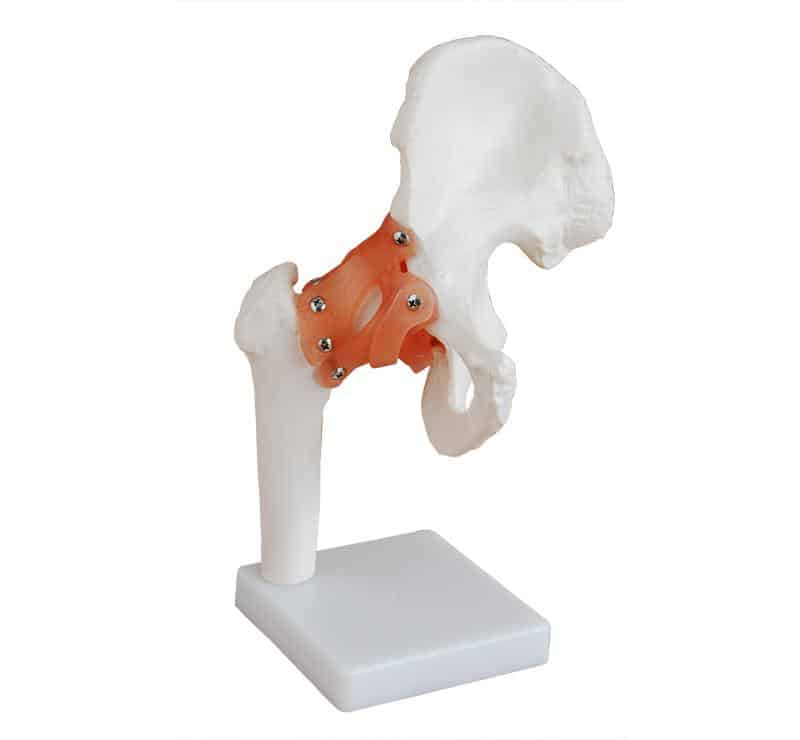
The Hip Joint Model is an anatomical teaching aid designed to demonstrate the structure and range of motion of the human hip joint. It is used extensively in medical schools, clinics, and physical therapy settings for education and patient consultation. It is used primarily by students and educators to study hip joint anatomy, pathology, and mechanics. It is utilized by healthcare providers to explain conditions like arthritis or hip fractures and to demonstrate post-surgical movements. And it help therapists demonstrate exercise techniques and rehabilitation movements.
- Anatomical Accuracy: The model is life-size and typically includes the femur (thigh bone), hip bone (innominate bone), and sacrum, providing a realistic representation of the ball-and-socket joint.
- Functional Movement: The model demonstrates key hip movements, including abduction, anteversion, retroversion, and internal/external rotation.
- Flexible Ligaments: It features artificial, flexible ligaments to demonstrate the stability and range of motion of the joint.
- Material: Constructed from durable PVC plastic, designed for frequent handling in classroom settings.
- Mounting: The model is usually mounted on a stand for easy display.